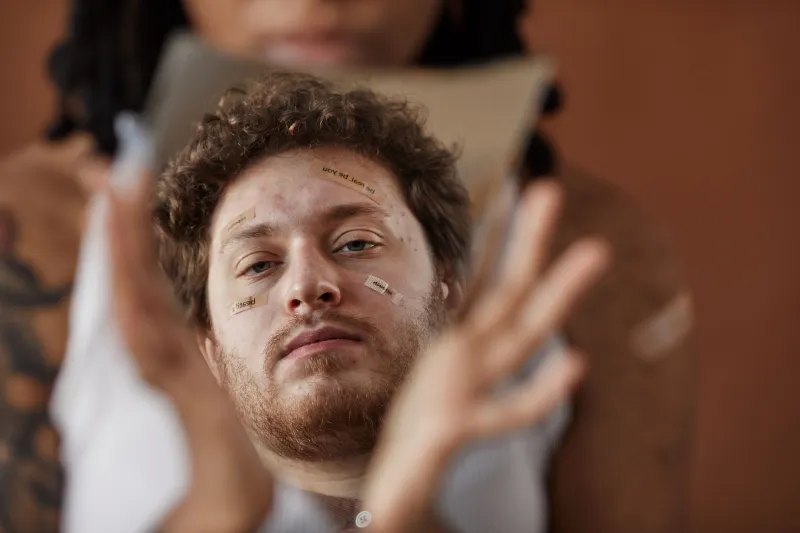
Authenticity used to be the cheat code. Show up real, build trust, grow an audience that actually cares. But somewhere between the origin story and the empire, 'being yourself' stopped being a choice and started being a contract you never signed. Here's what nobody tells you about turning your personality into a product.
The Deal You Made Without Reading the Fine Print
Let's say you built your following around being brutally honest. Maybe you were the creator who called out toxic hustle culture, or the one who documented your broke-twenties era in real time, or the one who cried on camera when things fell apart. People loved you for it. They trusted you because of it.
Fast forward a few years. You're doing better. You've evolved. Maybe you changed your mind about something publicly. Maybe you want to pivot into a different space entirely. Maybe you're just... different now, the way humans tend to be.
And suddenly, your audience — the same people who showed up because you were 'real' — are in the comments calling you a sellout.
That's the paradox nobody puts in the creator playbook: the more successful you are at performing authenticity, the less room you have to actually be authentic.
Authenticity Has an Expiration Date (That Nobody Warns You About)
Here's the thing about building a brand around your personality. Personalities change. Yours should. That's called growing up. But your audience often doesn't sign up for the version of you that's still figuring things out — they sign up for the version that already had it figured out enough to go viral.
Think about some of the most recognizable names in the creator space. The ones who built massive platforms on a very specific energy — a specific struggle, a specific aesthetic, a specific worldview. When they try to move, even slightly, the backlash is immediate. Comments flood in saying they've 'changed.' As if that's an insult.
What's actually happening is that the audience has developed a relationship with a character. And even when that character is based on a real person, the real person and the character are not the same thing. The real person ages, learns, softens, sharpens, makes mistakes, gets bored. The character is supposed to stay consistent, relatable, and on-brand — forever.
That's not a creative career. That's a hostage situation.
The Psychological Tax of Being Your Own IP
There's a specific kind of burnout that doesn't get talked about enough. It's not the kind that comes from posting too much or working too hard. It's the burnout that comes from feeling like you can't be a full person anymore.
When your personality is literally your product, every real feeling gets filtered through a business lens. You have a bad day — is this content? You want to quit — can I say that without tanking my brand deals? You're genuinely excited about something new — but it doesn't fit the niche, so do I post it or keep it to myself?
Over time, that internal negotiation becomes exhausting. And the worst part? It's invisible to everyone watching. From the outside, you look like you're thriving. From the inside, you're quietly asking yourself when the last time was that you did something just because you wanted to.
Some creators describe it as feeling like a stranger in their own content. They built a house out of their personality, and now they're renting rooms in it to an audience, and there's nowhere left that's just theirs.
The Secret Move More Creators Are Making Than You Think
Here's something that doesn't make it into many interviews: a surprisingly large number of well-known creators have side projects running under pseudonyms. Different names, different aesthetics, different audiences who have no idea who's behind the account.
Some do it to experiment creatively without the pressure of expectations. Some do it because they want to try something they know their existing audience would reject. Some do it just to remember what it felt like to create before anyone was watching.
It's not dishonest. It's survival.
And honestly? It's kind of brilliant. Because the pseudonym project gets to be messy and exploratory and weird in ways the main brand can't afford to be. It's where the real creative risk-taking happens. Where the person behind the brand gets to just be a creator again, without the weight of a reputation to protect.
If that sounds appealing to you, pay attention to that feeling. It's telling you something important.
How to Evolve Without Burning Everything Down
If you're in this situation — if you feel like your brand has become a cage — the answer isn't to blow it all up overnight. That's dramatic and usually unnecessary. But there are some things worth considering.
Give your audience a little credit. The followers who are genuinely invested in you as a person, not just a persona, will follow you through evolution. They might not all survive the transition, but the ones who do are the ones worth keeping. A smaller, more aligned audience is almost always more valuable than a large, mismatched one.
Introduce change gradually and with context. You don't owe anyone an explanation for growing, but people are more receptive to change when they feel like they're being brought along rather than surprised by it. Even a simple 'I've been thinking about this differently lately' goes a long way.
Build something separate if you need to. Not to deceive anyone, but to give yourself space. A second project, a different format, a newsletter that lives outside the main platform. Something that's yours without an audience expectation already baked into it.
Reframe what 'authentic' actually means. Real authenticity isn't performing the same version of yourself consistently forever. It's being honest about who you are right now, even when that person is different from who you were two years ago. The creators who last are the ones who let themselves be a moving target — and bring their audience along for the journey instead of pretending they never moved.
The Brand Is Not the Whole Story
At the end of the day, the most sustainable creative careers belong to people who never fully collapsed the distance between themselves and their brand. They're present, they're genuine, they share real things — but there's always a part of them that stays private, that belongs to no audience, that gets to just exist without being content.
The trap isn't authenticity itself. The trap is the belief that authenticity has to be total, constant, and consistent to be real.
You can be honest with your audience and still keep something for yourself. You can build a brand that represents you without letting it replace you. And you can evolve — publicly, messily, imperfectly — without it being a betrayal.
The version of you from three years ago signed a deal with your audience. But the version of you today gets to renegotiate the terms.
That's not selling out. That's growing up. And there's a difference.