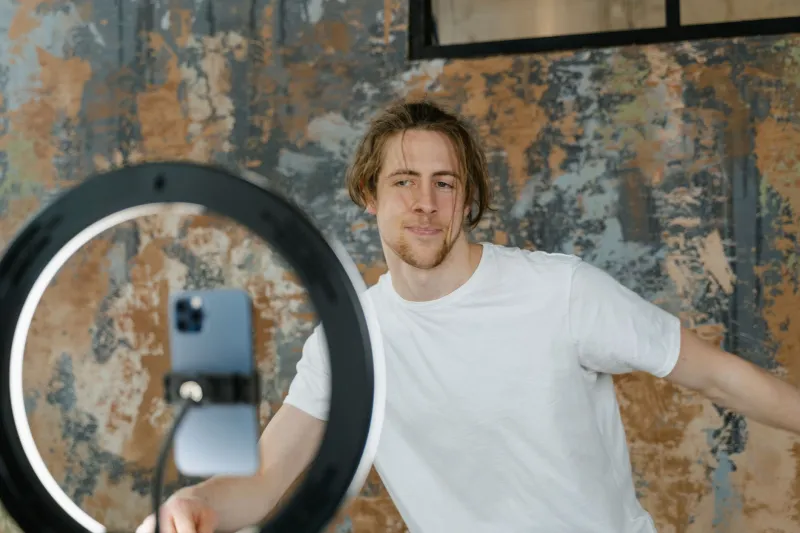
Let me paint you a picture. A creator sits down in front of their camera, no makeup, slightly bad lighting, maybe a pile of laundry visible in the background. They take a breath, look directly into the lens, and say, "I'm just going to be real with you guys today."
And here's the thing — they've said that exact sentence, in that exact tone, seventeen times before. The lighting is always that kind of bad. The laundry is always that visible. The pause before they speak is always that long.
Welcome to the authenticity performance. It's the most rehearsed show in the business.
When 'Unfiltered' Became Its Own Filter
Somewhere in the mid-2010s, audiences started getting tired of the glossy, aspirational content machine. The perfectly lit flat lays, the inspirational quotes over sunrise photos, the influencers who seemed to exist in a world where nothing ever went wrong. It felt hollow. People wanted real.
So creators pivoted. And the pivot was smart. Raw content, vulnerable storytelling, behind-the-scenes access — it worked, and it worked big. Audiences responded to the perceived intimacy of it all. The problem is that once something works, it stops being spontaneous and starts being a formula.
The cultural obsession with authenticity didn't eliminate curation. It just changed what we were curating toward. Now instead of perfection, we're curating toward the appearance of imperfection. And that's a much trickier thing to pull off, because it requires you to constantly perform the absence of performance.
Think about the creators you follow who built their brands on being "real." Chances are, their realness is remarkably consistent. The vulnerability lands at predictable moments. The emotional beats hit right on cue. That's not an accident. That's craft — and there's absolutely nothing wrong with it, except the part where everyone pretends it isn't happening.
The Paradox at the Center of It All
Here's the uncomfortable truth: claiming that your content is unfiltered is itself a filter. It's a framing choice, a positioning decision, a brand statement. The moment you decide to present yourself as someone who doesn't perform, you've made a very deliberate performance.
This isn't a cynical observation. It's actually kind of fascinating. The creators who are best at seeming effortless are usually the ones working the hardest. Emma Chamberlain didn't accidentally invent a new visual language for YouTube — she was hyper-aware of every edit, every joke timing, every moment she chose to include or cut. Her genius wasn't the absence of calculation. It was calculation that felt like its opposite.
The same goes for podcast hosts who seem to just be "having a conversation," comedians who do "crowd work" that somehow always lands, and TikTok creators whose "spontaneous" videos happen to have perfect audio and hit every trending sound at exactly the right moment.
Authenticity, as we've come to know it online, is a genre. And like any genre, it has rules, conventions, and formulas that creators learn and execute with varying degrees of skill.
Why We Resist Admitting This
There's a reason so many creators resist acknowledging the performative nature of their "authentic" content, and it's not just ego. It's because the whole value proposition of that content rests on the audience believing it's unmediated. The second you admit you thought carefully about how to seem like you didn't think carefully, the magic supposedly disappears.
But does it? Actually?
I'd argue no. Audiences are far more sophisticated than creators give them credit for. Most people watching a "raw" video already understand, on some level, that someone chose to film it, chose to post it, and chose the words they used. The implicit contract isn't "this is totally spontaneous" — it's "this feels more human than a Super Bowl ad." That bar is not impossible to clear while also being intentional about your work.
The guilt that comes with being strategic about appearing authentic is worth examining. Because what's actually more dishonest — a creator who carefully crafts vulnerable content and owns that craft, or one who carefully crafts vulnerable content while insisting it just poured out of them?
Leaning Into Intentionality Without Losing the Plot
So what does it look like to be genuinely honest about the performative nature of your work, without blowing up the thing that makes your work connect?
First, you can stop using language that overclaims. "I almost didn't post this" is fine as a feeling. It becomes dishonest when it's a reflex caption you attach to everything regardless of how you actually felt. Let the content speak. You don't need to pre-label it as brave.
Second, get comfortable with the idea that intentionality and connection aren't opposites. A screenwriter thinks carefully about every line of dialogue in a scene that makes you cry. That doesn't make your tears less real. Your audience's emotional response to your content doesn't require you to have been unconscious while making it.
Third — and this one's bigger — consider what it would look like to actually talk about this. Not in a meta, navel-gazing way, but in the way that signals genuine self-awareness. Some of the most compelling creators right now are the ones who can say "I thought a lot about how to say this" and still have it land. The transparency about the process can become its own form of connection.
The Freedom in Owning the Performance
There's something genuinely liberating about dropping the pretense that your most human-feeling content is your least considered content. It takes an enormous amount of mental energy to maintain the fiction that you're not performing when you absolutely are.
Every creator is a storyteller. Every storyteller makes choices. The medium changes, the platform changes, the format changes — but the fundamental act of shaping a narrative for an audience is always there. That's not a compromise of your realness. It's the definition of your craft.
You don't have to choose between being strategic and being genuine. Those two things can coexist, and honestly, the best work usually happens when they do. The most resonant content isn't the stuff that was made without thinking — it's the stuff that was thought about so carefully it stopped feeling like thinking.
So go ahead. Be intentional. Be calculated. Be deliberate about every choice that makes your audience feel like you weren't being deliberate at all.
Just maybe stop calling it unfiltered.