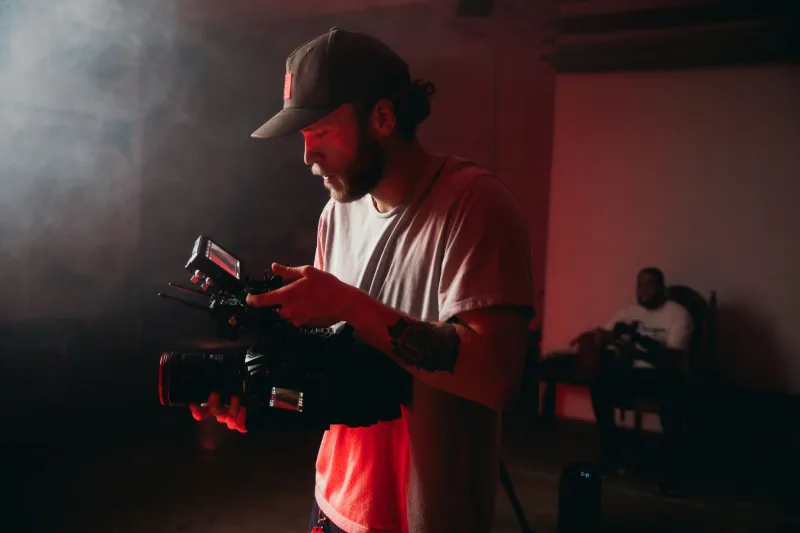
For a while, "show your work" was the best advice in the creator economy. Be transparent. Let people see the mess. Share the process, not just the polished result. It humanized creators, built trust with audiences, and honestly — it made for genuinely compelling content.
But that was before "showing your work" became its own content genre. Before BTS footage became a formula. Before every creator's creative process became a performance of a creative process. And now we're somewhere much more complicated, and most people haven't caught up to what that actually costs.
How Authentic Became a Template
The behind-the-scenes content that felt revelatory five or six years ago was revelatory because it was rare. Seeing how someone actually thought through a problem, made decisions, revised and reconsidered — that was genuinely interesting because most creators were still presenting polished, finished work as if it had arrived fully formed.
Then everyone figured out that the process content performed well. And once that happened, the process content stopped being about the process.
Now there's a whole aesthetic around creative vulnerability. The messy desk shot. The "this isn't working yet" voiceover. The montage of failed attempts before the breakthrough. These aren't inherently dishonest, but they're constructed. They're a version of the process, edited for watchability, paced for engagement, framed for relatability. They're content about making content, and they follow their own set of conventions just as rigidly as the polished work they were supposed to be an antidote to.
The authenticity became a format. And like every format, it started producing more heat than light.
The Intellectual Property Problem Nobody's Talking About
Here's the part that has genuinely significant stakes beyond just aesthetics: when you document your creative process in detail — your research methods, your ideation frameworks, the specific way you approach a problem — you're giving that away.
In a creator economy that increasingly rewards methodology over execution, that matters. Your process is often the differentiator. Not just what you make, but how you think about making it, the systems you've developed, the specific sequence of decisions that produces your particular output. That's intellectual property, and it's yours, and you're packaging it as content.
Other creators — especially newer ones who are still developing their approach — are watching your process breakdowns and learning from them. That's not inherently bad. Generosity with knowledge is a real value. But there's a difference between teaching intentionally and just... leaving your entire methodology on the table for anyone to pick up.
The creators who built durable, distinctive careers in any medium didn't do it by making their process completely transparent. There was always some mystery — some gap between what you could see and what you couldn't fully replicate even if you tried. That gap is where the magic lives. When you close it entirely in the name of authenticity, you've given away something you can't get back.
What Happens to Thinking When It Becomes Content
There's a subtler problem too, one that's less about strategy and more about the actual quality of your creative work.
Thinking — real thinking, the messy exploratory kind — requires privacy. It requires the freedom to consider ideas you'll ultimately reject, to be wrong in ways you'd be embarrassed by, to change your mind completely between Tuesday and Thursday. When you're documenting your process as it happens, you lose that freedom.
You start performing the thinking rather than doing it. You make decisions that look good on camera rather than decisions that are right for the work. You skip the genuinely ugly middle stages because they don't make for watchable content. You arrive at conclusions faster than you should because the audience is waiting.
This is a real creative cost. The work that comes out of a documented process is often subtly different from the work that comes out of a private one — less patient, less willing to sit with uncertainty, more concerned with legibility than with depth.
You're not just sharing your process. You're letting the content requirements reshape the process itself.
The Mystery Accusation
Here's the pushback you'll get if you start keeping more of your process private: people will say you're being inauthentic. Gatekeeping. Pretentious. The whole "show your work" ethos has become so normalized that withholding feels like a violation of some unspoken contract.
This is worth pushing back on directly.
Privacy about your process is not the same as dishonesty about your results. You can be completely genuine about what you make without narrating every step of how you made it. Artists have always worked this way. Writers don't owe readers a manuscript history. Directors don't owe audiences every cut they considered. The finished work is the thing you're accountable for, not the interior experience of making it.
There's also something worth saying about the relationship between mystery and longevity. Creators who maintain some opacity about how they think and work tend to stay interesting longer. When you know everything about how someone operates, the work becomes predictable in a way that slowly erodes your investment. Mystery isn't manipulation — it's just the natural condition of encountering someone whose inner life you can't fully access.
What to Actually Share (and What to Hold Back)
None of this means your process is off-limits forever. It means being more deliberate about what you share and why.
Things worth sharing: finished work, the emotional experience of making things, lessons you've genuinely learned and want to teach, the context around a project that helps people understand what it means.
Things worth protecting: your specific research and ideation methods, your frameworks for decision-making, the exact sequence of how you develop ideas, the stuff that would let someone else replicate your output if they followed the steps closely enough.
The test is simple: if someone could watch what you're about to share and meaningfully reproduce your process, you might want to think twice. Not because you owe the world nothing, but because you owe yourself the right to be irreplaceable.
Keep Some Things for Yourself
The creator economy has spent years telling you that more transparency is always better, that there's no such thing as oversharing if the engagement metrics are good, that your audience deserves access to your full creative life.
That's not true. And it never was.
You're allowed to have a creative interior that nobody gets to see. You're allowed to develop ideas in private, make mistakes off-camera, change your mind without documenting the change. You're allowed to be someone whose work is knowable even when your process isn't.
That's not inauthenticity. That's just having a self that's bigger than your content.